
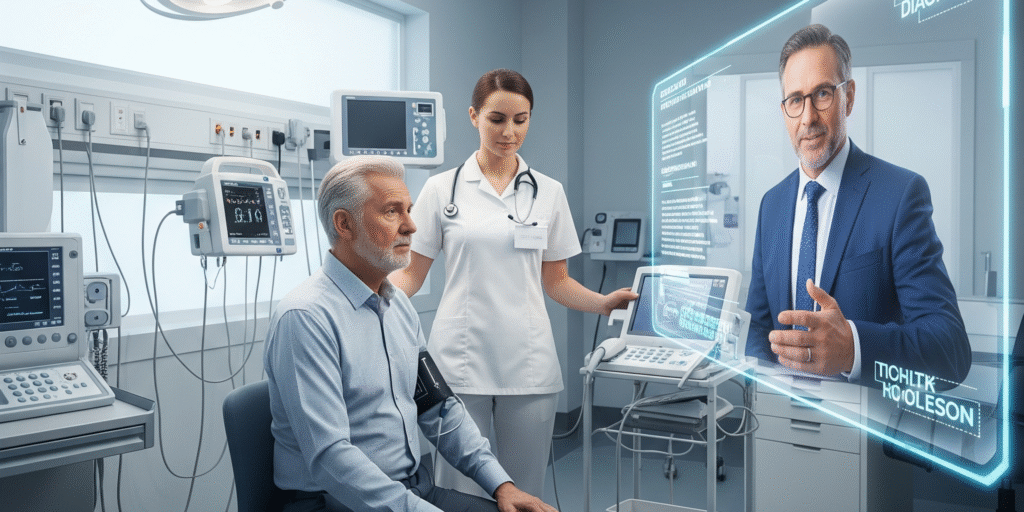
In today’s fast-paced world, technology is transforming every industry—and healthcare is no exception. One of the most exciting innovations reshaping patient care is the rise of the hybrid medical clinic, a revolutionary model that combines in-person care with the convenience and efficiency of virtual medical supervision. At the forefront of this model is the concept of the virtual doctor, a licensed physician who remotely evaluates patients using advanced telehealth tools and collaborates seamlessly with skilled on-site nurses and medical staff.
What Is a Hybrid Clinic?
A hybrid clinic is a modern healthcare facility where patients visit in person, but their medical evaluation and care plan are guided by a remote physician. The patient still benefits from face-to-face interaction—with a trained nurse or provider physically present—but the oversight and medical decision-making come from a board-certified doctor connected via secure telemedicine platforms.
This model offers the best of both worlds:
• Hands-on testing and physical exams
• Remote physician consultations and diagnosis
• Immediate access to therapies and treatments under supervision
How Does It Work?
Here’s how the hybrid model typically operates:
1. In-Person Visit: A patient arrives at the clinic and is welcomed by trained medical staff, including registered nurses and medical assistants.
2. Virtual Evaluation: Using high-resolution video technology, connected diagnostic tools (like digital stethoscopes, otoscopes, and vitals monitors), and secure EMR integration, a virtual doctor evaluates the patient in real time.
3. On-Site Support: The nurse performs necessary tests, collects lab samples, and delivers any immediate care required—such as wound care, IV therapy, or injections—per the virtual doctor’s direction.
4. Collaborative Care Plan: The virtual doctor prescribes medications, orders advanced testing, or coordinates specialist referrals, while the clinic staff continues to support the patient with follow-up care.
The Power of Technology in Hybrid Care
Thanks to cutting-edge medical devices, remote physicians can obtain vital patient data as accurately as if they were in the room. For example:
• Bluetooth-connected stethoscopes transmit heart and lung sounds in real time.
• Tele-otoscopes and dermatoscopes allow close inspection of the ears, skin, and throat.
• Integrated EHR systems give virtual doctors immediate access to patient history and lab results.
Combined, these tools allow for high-quality diagnostics without the need for the physician to be physically present—saving time and increasing accessibility.
Benefits for Patients
Patients gain access to comprehensive care without long waits, unnecessary ER visits, or inconvenient scheduling. Hybrid clinics are especially beneficial for:
• Busy professionals needing efficient care
• Elderly or mobility-challenged individuals
• Rural communities where physicians may not be available locally
• Urgent care situations that don’t require full emergency services
Benefits for the Healthcare System
• Reduces burden on hospital systems and ERs
• Expands physician reach across multiple locations
• Improves clinic efficiency and reduces overhead
• Increases access to specialists in underserved areas
Real-Time Supervision. Real Human Care.
While some worry that virtual care may feel impersonal, hybrid clinics strike a balance. Patients interact with compassionate in-person nurses, while also receiving the expertise of remote physicians who are fully engaged in their care. The result is safe, high-quality, human-centered medicine, supported by the convenience and scalability of modern technology.
⸻
Conclusion
The hybrid clinic with virtual doctor supervision is not a concept of the future—it’s happening now. It’s a game-changer for how we deliver healthcare, blending innovation with the human touch that medicine demands. As more clinics adopt this model, patients everywhere will enjoy faster, smarter, and more accessible care.
Welcome to the next generation of healthcare.
By Andreas Grossgold, MD